Commercial cleaning and food hygiene professionals in Brampton support food establishments, food centers, baking facilities, warehouses, and mobile food services staying compliant. They decontaminate high-contact points, food preparation surfaces, equipment, floors, drains, restrooms, and food handling spaces using certified products, maintaining proper ratios, and recording exposure duration. You require regular sanitation based on hazard level, volume, food allergies, and regulatory assessments, plus documented proof that support HACCP, quality reviews, and regulatory adherence. The sections below outlines what strong sanitation programs should include.
Main Points
- Sanitation technicians from Brampton work with restaurants, grocery departments, commissaries, warehouses, bakeries, schools, mobile vendors, and allergen-sensitive operations.
- They disinfect frequently contacted areas, food-contact equipment, kitchens, floors, drains, restrooms, and storage areas using sectional methods to avoid cross-contamination.
- Verification of approved sanitizer dilution, alignment, and exposure duration is conducted by trained providers, with finalization recorded using swabs, reviews, and corrective-action records.
- Cleaning schedules must comply with hazard, throughput, format changes, incidents, and regulations, with daily, regular, and cyclical activities assigned by area.
- Coverage, colour-coded implements, HACCP, sanitation expertise, WHMIS education, credentials, and audit-ready hygiene files are essential contractor qualifications.
Food Safety Cleaning Requirements for Brampton Venues
You must adhere to food safety cleaning if your facility is covered by health inspections, food codes, or HACCP protocols. This covers dining establishments, employee cafes, distribution hubs, market sections, meat shops, fish stands, retail outlets, and food service kitchens.
Compliant food safety cleaning is equally necessary in distribution centers, processing facilities, refrigerated storage, commercial bakeries, school meal programs, event venues, and delivery services. Temporary and mobile businesses apply similarly, examples including mobile kitchens, market vendors, and seasonal booths. Your establishment needs documented cleaning protocols should your staff handle raw materials, divide prepared foods, warm meals, or maintain allergen storage. In Brampton, cleanliness stays elective; it forms statutory, functional, and public health standards.
What Do Brampton Cleaning Professionals Handle?
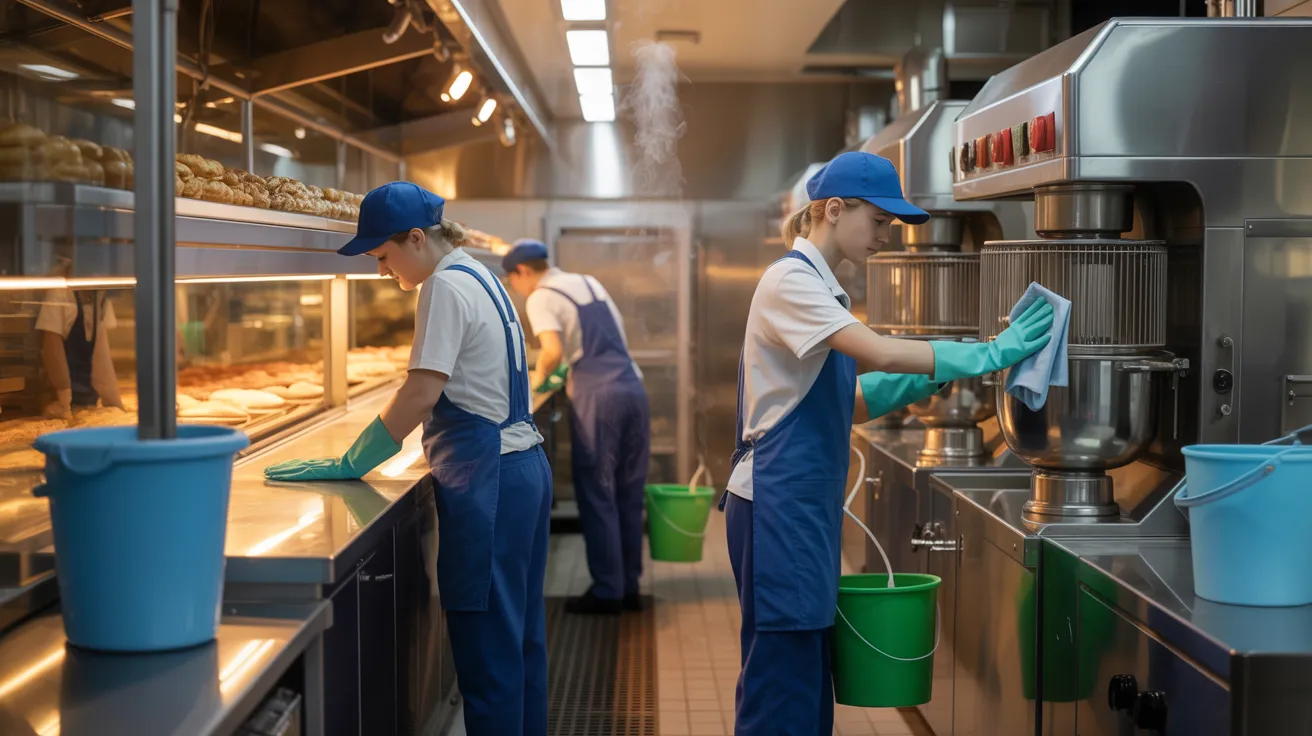
Professional cleaning teams specializing in Brampton disinfect high-contact surfaces, kitchen facilities, ground surfaces, and sanitary facilities in compliance with food safety regulations. Focus on these locations stems from extreme cross-contamination risk, potential for accidents, and possible regulatory violations.
When you understand what they clean, you can ensure your operation's cleaning procedures satisfy operational and regulatory requirements.
Focusing on High-Touch Surface Sanitizing
structure sanitization schedules according to foot traffic, environmental hazards, and business activities.
changing cleaning materials appropriately, maintaining sequential systems, and dividing cleaning tools according to section. These measures keep your cleaning plan quantifiable, justified, and ready for inspection at all times.
Food Prep Areas, Flooring, and Sanitary Facilities
Brampton cleaning professionals will handle kitchens, floors, and restrooms since each space presents separate food safety concerns, slip-and-fall, and community health challenges. In industrial kitchens, you need grease removal from cooking stations, appliance surfaces, drain systems, preparation areas, and backsplashes to minimize contamination and pest pressure.
You should also expect documented floor care. is likewise provided as part of the service.
For restroom sanitation, cleaners disinfect touchpoints, fixtures, partitions, dispensers, and waste containers, then replace products and reduce odor. They also service restaurant moprooms, where chemical storage, sink hygiene, and drainage conditions can affect sanitation compliance and staff safety daily.
How Food Safety Cleaning Benefits Brampton Operations
To adhere to health code requirements and pass inspections, Brampton establishments must maintain food-safe cleaning standards. You also reduce cross-contamination by cleaning and sanitizing food-contact surfaces, equipment, and high-touch areas correctly. Most importantly, you help protect community wellness by reducing the chance of food poisoning in your establishment.
Sanitary Standards Adherence
Because Brampton food operations operate under stringent health requirements, food safety cleaning directly impacts your ability to meet health code requirements, safeguard customers, and eliminate enforcement action. You must maintain sanitized food contact points, documented cleaning schedules, proper chemical use, and auditable operational standards that comply with municipal and provincial inspection expectations.
During regulatory assessment of your operation, regulators assess whether your hygiene protocols facilitates safe storage, equipment sanitation, refuse management, and washroom maintenance. Strong cleaning records help you to show due diligence during regulatory audits and show that your procedures are standardized, consistent, and overseen.
Contamination Prevention
Maintaining health code standards copyrights on your power to stop cross-contamination during everyday food preparation and sanitation. You must separate raw ingredients from ready-to-eat foods, sterilize work zones between assignments, and store chemicals away from food-contact items. Clear procedures reduce transfer risks and reinforce steady regulatory adherence.
Building allergen isolation prevents priority allergens from contacting common workstations, storage, or apparatus. Utilize dedicated cutting boards, color-coded tools, and precise instrument labeling so staff don't mix items during preparation or service.Enforce handwashing after handling uncooked meats, shellfish, egg items, or allergen substances. Swap wiping cloths regularly, and confirm sanitizer strength with test strips. When your team follows these practices each shift, you foster a cleaner, more secure operation that exceeds Brampton's safety standards daily.
Public Wellness Protection
If proper sanitation declines, you don't merely face potential inspection issues—you amplify the risk of pathogenic contamination harming customers, staff, and the broader Brampton area. You also weaken your role in safeguarding community wellness, especially in busy food facilities where pathogens travel quickly through surfaces, equipment, and touchpoints.
You must implement cleaning procedures that eliminate contaminants, properly disinfect, and verify results. This entails adhering to exposure times, utilizing authorized sanitizers, maintaining records, and coaching staff to fulfill compliance standards. These actions support disease prevention by suppressing pathogens before contaminating food or hands. In Brampton, effective cleaning protects at-risk groups, curtails outbreak likelihood, and demonstrates accountability. When you adhere to proper protocols, you go beyond regulations—you meaningfully lower danger and promote secure food service across the region.
How Does Cleaning Support Food Safety Compliance?
Maintaining rigorous cleaning routines supports food safety compliance by decreasing contamination threats, preventing pathogen multiplication, and keeping your facility aligned with sanitation requirements under HACCP-based programs and public health regulations. You verify that product-contact areas remain visibly clean and microbiologically controlled, backing documented preventive controls and inspection readiness.
Effective cleaning also reinforces allergen control by removing residues that can lead to undeclared allergen exposure. by removing residues that can cause undeclared allergen exposure.
When Should You Schedule Commercial Cleaning?
spill incidents, and following-maintenance work
You should also arrange periodic tasks independently
Finding Quality Brampton Cleaning Experts: A Guide
Evaluate providers first by food-safe sanitation requirements rather than price alone. You must ensure each provider understands CFIA, public health, and HACCP requirements for your business. Request proof of insurance, WHMIS compliance, staff training documentation, and supervision methods. Check technician awareness of cross-contamination risks, chemical handling, and documented sanitation practices.
You should also assess operational reliability and responsibility. Request references from Brampton food businesses, then examine response times, corrective-action procedures, and communication standards. Confirm the company participates in supplier audits and can present audit-ready records when regulators or third parties request evidence. Check whether equipment is maintained is performed, colour-coded tools are used appropriately, and site-specific hazards are recognized. A qualified provider protects compliance, product integrity, and your brand reputation.
Which elements are part of a Food Safety Cleaning Plan?
Put together a written program that clarifies every sanitation task, standard, and responsibility ahead of production commencement. You should specify cleaning frequencies, approved chemicals, dilution rates, contact times, tools, and verification methods for each zone, surface, and piece of equipment. Make sure to include pre-operational inspections, corrective actions, and employee training requirements.
Your plan should also address prevention of contamination, waste management, pest-control tactics, and scheduled records for restrooms, drains, floors, and food-contact areas. Outline how you'll distinguish between uncooked and prepared items, support ingredient tracking, and maintain accurate allergen labeling through validated cleaning between product changes. You should establish accountability, document signed records, and assess results against regulatory standards, HACCP controls, and customer requirements. When gaps appear, update procedures immediately and instruct staff.
Commonly Requested Questions
Are sanitation providers available for nighttime operations in Brampton properties?
If you manage regulated spaces, you'll also require records that support audits and maintain assurance.
Will Brampton cleaning experts address emergency spills?
Yes, you can expect many Brampton sanitation professionals to provide hazard containment services. They handle hazard containment, assess risks, contain contamination, and start rapid decontamination to reduce exposure and operational disruption. You should confirm their response times, training certifications, PPE protocols, and waste management. If your facility must comply with industry standards, choose a provider that records events, maintains regulatory procedures, and supports audit readiness.
Will eco-friendly disinfectants sanitize safely food preparation areas?
Yes, natural disinfectants can be appropriate for food preparation areas if you pick solutions certified for food use and meeting regulatory standards. You should check contact times, dilution rates, and rinse procedures before application. Many botanical formulations lower chemical hazards, but you should gather confirmation of performance against harmful bacteria. To preserve residue-free areas, you must adhere to manufacturer instructions exactly and verify the cleaning agent satisfies food sanitation requirements.
Will sanitation programs respond to seasonal variations?
Absolutely, cleaning plans are customizable for production fluctuations. Adjust schedules, labor allocation, cleaning agents, and verification steps to match seasonal workflows while preserving regulatory compliance. Reduce equipment downtime through scheduling disinfection surrounding production shifts, peak volumes, and usage cycles. Further modify SSOPs, staff education, and facility monitoring to reflect seasonal hazards, emerging allergens, or increased soiling. Ongoing evaluations maintain the plan current.
Will professional cleaning services teach your staff on sanitation best practices?
Certainly, professional cleaning experts train your employees on hygiene protocols. You obtain staff training on proper chemical use, contact times, cross-contamination prevention, machine disassembly, and documentation. They generally coordinate instruction with HACCP, GMP, and CFIA or regional health bodies standards. Many helpful guide also run sanitation audits to verify compliance, identify gaps, and reinforce corrective actions. This helps you copyright standard processes, satisfy audits, and reduce food safety risks daily.
Conclusion
Through engaging Brampton food safety and commercial cleaning experts, you accomplish much beyond organizing—you ensure your facility for inspections and your standards stay aligned with regulations. From kitchen spaces to processing areas, all clean areas and organized zones reduce contamination risks and prevent significant costs. Through booking service on suitable timelines and adhering to a comprehensive cleaning program, you ensure protection for your team, clients, and your standing. In a tightly controlled regulatory landscape, proper sanitation cannot be considered optional—they are fundamental to success.